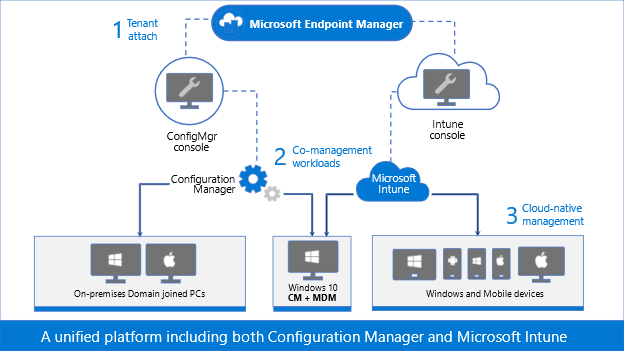
Posted on Microsoft Tech Community: As we talk with our customers that are using Microsoft Endpoint Manager to deploy, manage, and secure their client devices, we often get questions regarding co-managing devices and hybrid Azure Active Directory (AD) joined devices. Many customers confuse these two topics – the first is a management option, while the second is an identity option. In this blog, I hope to clear up any confusion and give guidance and scenarios on how to use both to manage and protect your devices.
You May Also Like
Weekly Newsletter – 14th May to 20th May 2022
Welcome to the Fortieth One (41th) Windows 365 Community newsletter! We highlight…
- Morten Pedholt Pedersen
- May 20, 2022
Weekly Newsletter – 17th of June to 23th of June 2023
Welcome to the Ninety-sixth (96th) edition of the Windows 365 Community newsletter!…
- Thomas Marcussen
- June 24, 2023
Weekly Newsletter – 8th of November to 14th of November 2025
Welcome to the one-hundred-ninety-seventh (197th) edition of the Windows 365 Community newsletter!…
- Sune Thomsen
- November 14, 2025
Weekly Newsletter – 6th of September to 19th of September 2025
Welcome to the one-hundred-ninety-first (191st) edition of the Windows 365 Community newsletter!…
- Sune Thomsen
- September 19, 2025
Windows 365 unified experience (endpoint + cloud pc) desktop-client
Learn how to unify Windows 365 experience (endpoint + cloud PC) to…
- Juan Sifuentes
- June 29, 2022
Deploy CM Client to Windows 365 Cloud PC Azure AD Joined (no CMG)
What if your MECM (Microsoft Endpoint Configuration Management) server “aka SCCM” PC management solution is well developed…
- Juan Sifuentes
- August 1, 2022